
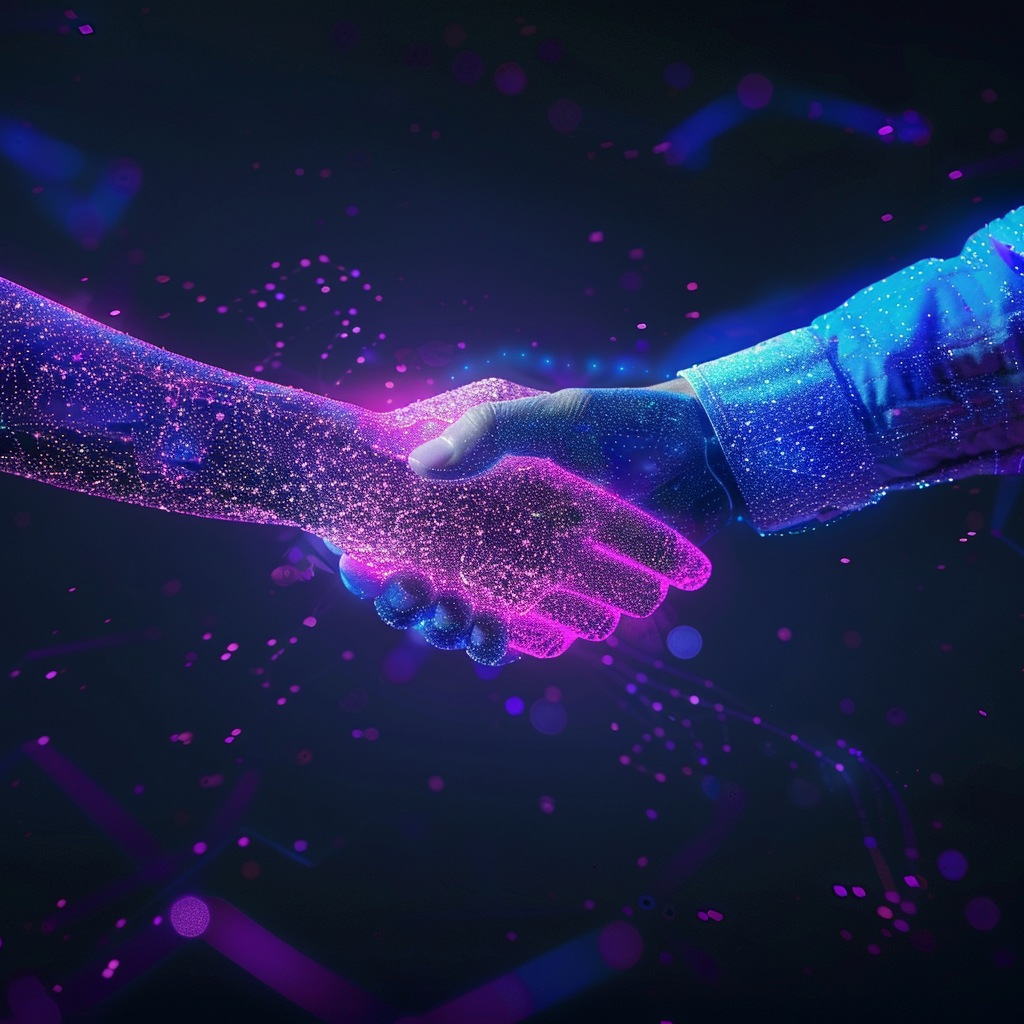
You might think you understand artificial intelligence. After all, you use Siri, talk to Alexa, and maybe even dabble with ChatGPT. But trust me, you ain’t seen nothing yet.
The AI revolution is here, and it’s not just about virtual assistants or chatbots. We’re talking about a seismic shift that’s going to reshape every aspect of your life. From the way you work to how you learn, and even how you interact with the world around you. Buckle up, because things are about to get wild.
Meet Your New Co-Worker – Agentic AI
Remember when AI was just a fancy term for programs that could play chess or answer simple questions? Those days are long gone. Welcome to the era of agentic AI – systems that don’t just respond to commands but take initiative and act independently.
Imagine an AI that doesn’t wait for your input but anticipates your needs. It schedules your meetings, prioritizes your emails, and even drafts responses – all before you’ve had your morning coffee. Sounds like science fiction? It’s happening right now.
But here’s the kicker – agentic AI isn’t just about making your life easier. It’s redefining entire industries. In healthcare, these systems are diagnosing diseases and developing treatment plans. In finance, they’re making split-second trading decisions that can make or break fortunes.
The implications are huge. Are we ready for a world where AI doesn’t just assist us but often takes the lead?
The Secret Language of Machines
Now, you might be wondering how these AI systems understand us so well. The answer lies in a little thing called embeddings. Don’t worry if you’ve never heard of them – most people haven’t. But they’re the secret sauce that’s making AI smarter than ever.
Embeddings are like a translation tool between human language and machine understanding. They take our messy, context-dependent words and turn them into precise mathematical representations that computers can work with.
This might not sound groundbreaking, but trust me, it is. Embeddings are what allow AI to understand the nuances of human communication. They’re why chatbots can pick up on sarcasm, why recommendation systems seem to know you better than you know yourself, and why AI can now generate human-like text and even art.
The power of embeddings is transforming everything from search engines to customer service. And we’re only scratching the surface of what’s possible.
The AI Arms Race
With all this potential, it’s no surprise that governments are scrambling to get ahead in the AI game. It’s like the space race of the 21st century, but with even higher stakes.
Leaders like Emmanuel Macron and Piyush Goyal are pushing for national AI strategies. They’re not just thinking about economic benefits – they’re worried about security, ethics, and who gets to write the rules for this new AI-driven world.
And they should be worried. AI is raising some pretty thorny questions. Who’s responsible when an AI makes a mistake? How do we prevent AI from being used for surveillance or manipulation? And perhaps most importantly, how do we ensure that AI benefits everyone, not just a privileged few?
AI in Your Backyard
But let’s bring this back down to earth. How is AI changing things in your day-to-day life? Well, if you’ve been to a library recently, you might have noticed some changes. AI-powered systems are revolutionizing how we access and interact with information.
These systems can analyze millions of books and articles in seconds, helping you find exactly what you need. They can even suggest resources you might not have thought to look for. It’s like having a super-smart librarian at your fingertips 24/7.
And it’s not just libraries. Customer service is getting an AI makeover too. Those chatbots you talk to? They’re getting smarter by the day. Soon, you might not be able to tell if you’re talking to a human or an AI. Is that cool or creepy? You decide.
The Ethical Minefield
Now, I know what you’re thinking. This all sounds great, but what about the downsides? You’re right to be concerned. The rise of AI is bringing up some serious ethical questions.
There’s a whole field of study dedicated to something called AI alignment – basically, making sure AI systems act in ways that benefit humanity. Sounds simple, right? It’s not. We’re talking about creating machines that can think for themselves. How do we ensure they share our values?
And let’s not forget about privacy. With AI systems that can process and understand vast amounts of data, including our personal information, where do we draw the line? How much of ourselves are we willing to give up for the convenience AI offers?
The Road Ahead
So, where does all this leave us? On the brink of a new era, that’s where. AI is not just changing the game – it’s creating an entirely new one.
The potential benefits are enormous. AI could help us solve some of our biggest challenges, from climate change to disease. It could free us from mundane tasks, giving us more time to be creative, to connect with each other, to be human.
But the risks are just as big. We’re talking about systems that could potentially outthink us, outperform us, maybe even control us. If that doesn’t keep you up at night, I don’t know what will.
Here’s the thing, though: the future of AI isn’t set in stone. We – you, me, all of us – have a say in how this plays out. It’s up to us to stay informed, to ask the hard questions, and to demand that AI be developed responsibly.
The AI revolution is here, whether we’re ready or not. The question is: what are you going to do about it?
Welcome to the future. It’s going to be one hell of a ride.


 MarketMagnetix Media Group Insights
Leave a comment