
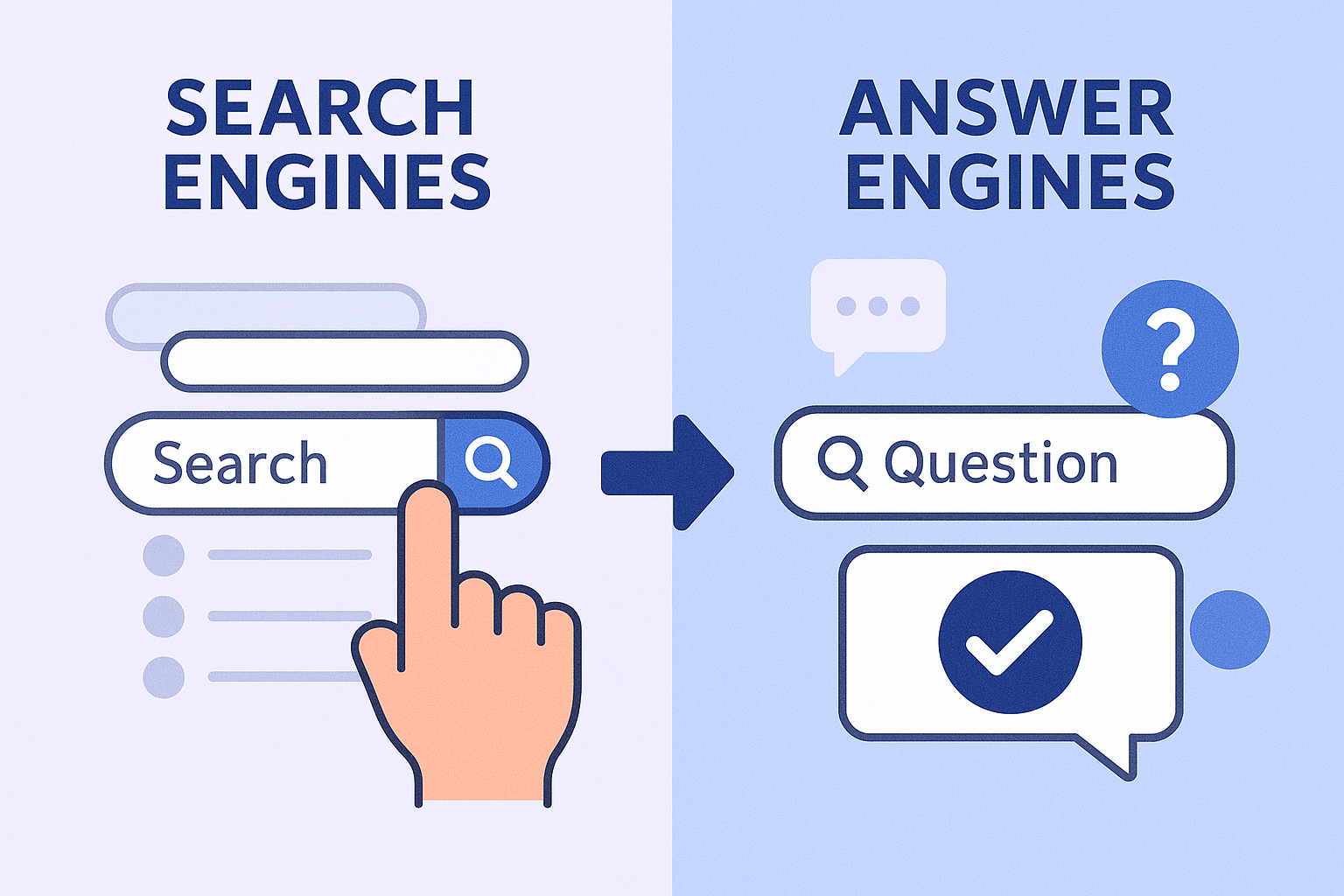
Your customers stopped searching. They started asking.
The shift happened faster than anyone predicted. Between June and September 2024, ChatGPT usage as a primary search engine jumped from 1% to 8% while Google’s share dropped from 80% to 74%.
That’s not gradual adoption. That’s a wholesale transformation of how people find information.
We’re watching the end of browsing as we know it. Instead of scrolling through ten blue links, people now ask AI tools direct questions and get synthesized answers. No clicking. No comparing. No traditional search behavior at all.
The Numbers Tell the Real Story
The data reveals something profound about human behavior. Nearly 25% of Americans now use AI to answer queries rather than traditional search engines.
Think about what that means for your business.
A quarter of your potential customers have fundamentally changed how they discover information. They’re not visiting your website through Google anymore. They’re asking ChatGPT, Perplexity, or Claude for recommendations.
And the transformation is accelerating. Gartner forecasts a 25% decline in search engine usage by 2026, attributing this drop primarily to AI chatbots.
Why This Changes Everything
Traditional SEO optimized for human browsing patterns. You created content hoping people would find it, click it, and engage with it. The entire digital marketing ecosystem built around that assumption.
AI search eliminates the browsing step entirely.
When someone asks an AI tool for business recommendations in your industry, the AI doesn’t send them to Google. It provides direct answers based on the information it can access and synthesize.
Your business either gets mentioned in that answer, or it doesn’t exist in that conversation.
The Rise of Language Model Optimization
Welcome to LLMO. Large Language Model Optimization.
While everyone focused on ranking higher in Google, a new optimization challenge emerged. How do you ensure AI systems understand, interpret, and recommend your business when people ask relevant questions?
LLMO requires a different approach than traditional SEO. Instead of optimizing for search algorithms, you optimize for AI comprehension and recommendation patterns.
The businesses that figure this out first will dominate their industries. The ones that don’t will become invisible to an increasingly large segment of potential customers.
What This Means for Your Business
Your website might rank #1 on Google, but if AI tools can’t effectively parse and recommend your business, you’re missing conversations with potential customers every day.
Consider this scenario: Someone asks ChatGPT for the best email marketing consultant. If your information isn’t structured in a way that AI can understand and recommend, you won’t be part of that conversation.
Meanwhile, your competitor who optimized for AI discovery gets the recommendation and the business.
The competitive advantage goes to businesses that understand how AI systems process and prioritize information. This means creating content that’s not just keyword-optimized, but AI-comprehensible.
The Practical Reality
We’re not suggesting you abandon SEO entirely. Google still processes billions of searches daily. But the trajectory is clear, and the smart money prepares for what’s coming.
Start thinking about your digital presence differently. Instead of just asking “How do I rank higher?” ask “How do I become the business AI recommends?”
That might mean restructuring your website content, optimizing your business descriptions, or ensuring your customer reviews are accessible to AI systems. The specific tactics matter less than the strategic recognition that the game has changed.
The Opportunity Hidden in Plain Sight
Most businesses haven’t caught up to this shift yet. They’re still optimizing for yesterday’s search behavior while their customers have already moved to tomorrow’s discovery patterns.
That creates a massive opportunity for businesses that adapt quickly.
While your competitors focus on traditional SEO, you can position your business to dominate AI-mediated discovery. The businesses that win this transition will be the ones that recognized it early and acted decisively.
Moving Forward
The question isn’t whether AI will transform search behavior. The data shows it already has.
The question is whether your business will be discoverable in the new paradigm.
Your customers stopped searching last month. They started asking. The businesses that understand this shift and optimize for it will thrive. The ones that don’t will wonder where their customers went.
The transformation is happening now. Your response determines whether you benefit from it or get left behind by it.

 MarketMagnetix Media Group Insights
Leave a comment