
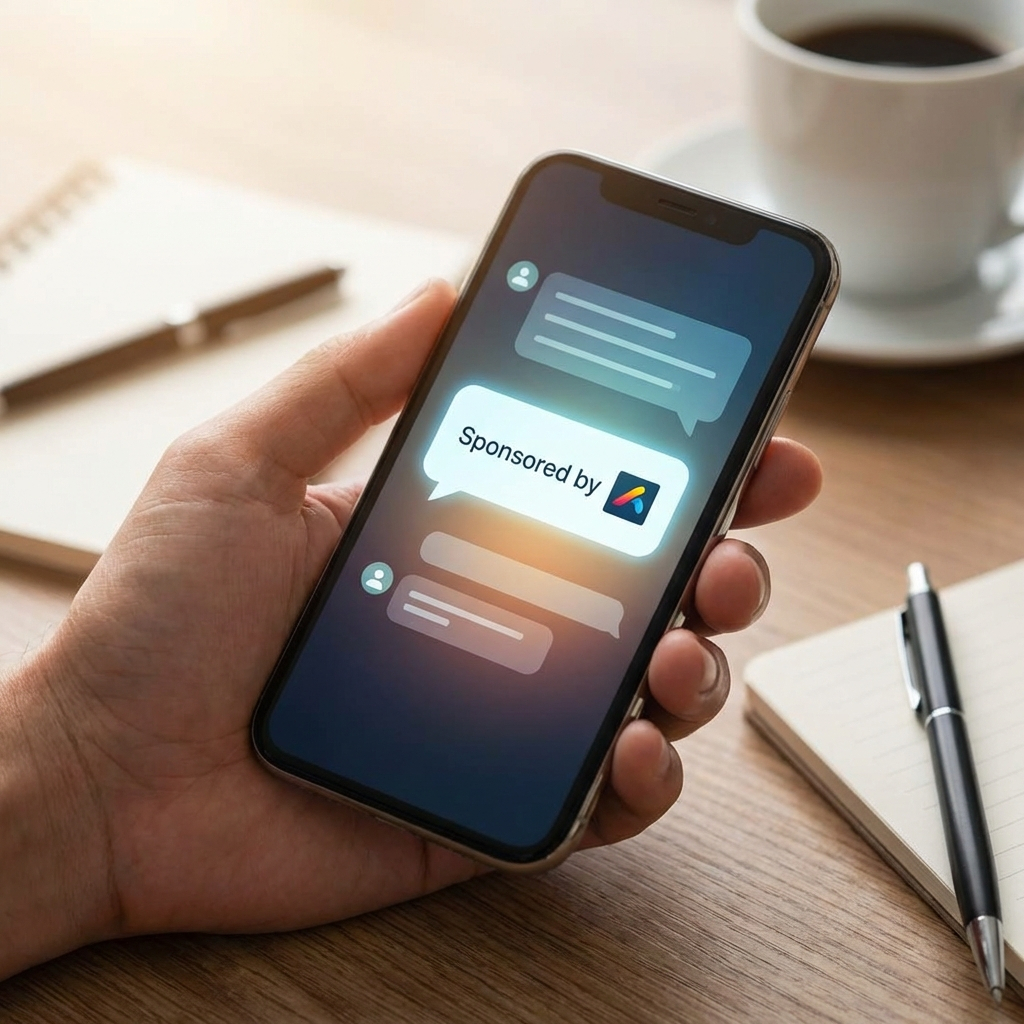
I’ve been watching something unfold that’s going to reshape how every business reaches customers.
OpenAI just announced they’re introducing ads to ChatGPT’s free tier and the $8/month Go plan. Starting in the United States, this represents the first major monetization play for a platform that’s processing 2 billion daily queries from 800 million weekly active users.
That number doubled from 400 million in just February 2025.
But here’s what matters more than the numbers: this isn’t just another advertising platform launching. This is the moment when conversation-based marketing becomes real, and when the global advertising industry that’s expected to hit $1 trillion annually this year gets a new channel that operates on completely different rules.
The Intent Economy Just Got Real
I’ve spent years helping businesses crack the email marketing code. The secret was always about understanding what someone actually wants before you try to sell them something.
ChatGPT ads take that principle and supercharge it.
When someone types a question into ChatGPT, they’re not browsing. They’re not killing time. They’re actively problem-solving in real-time. They’re asking “What’s the best email marketing tool for a 10-person team?” or “How do I reduce cart abandonment on my Shopify store?”
That’s pure, unfiltered intent.
The data backs this up. Intent-based targeting drives a 48% decrease in cost per acquisition compared to traditional search alone. Engagement lifts by 153% because the ad appears as a helpful solution to a specific question someone is actually asking.
Gen Z users write the longest search queries, averaging 5.83 words. They treat search engines like companions, asking complete questions instead of typing fragmented keywords. By decoding these long, conversational queries, platforms capture intent that keyword approaches miss entirely.
What This Means for Your Business in 2026 and Beyond
I’m going to make some predictions based on what I’m seeing.
First prediction: Small businesses will gain ground faster than enterprises.
Why? Because 99% of small businesses are already using at least one technology platform. AI adoption has jumped to 88% in at least one business function according to McKinsey’s November 2025 State of AI report.
OpenAI designed these tools specifically to level the playing field. They want to enable small businesses to create high-quality experiences and reach customers they wouldn’t otherwise find.
The enterprise companies will move slower. They’ll form committees. They’ll run pilots. They’ll debate brand safety and compliance.
Meanwhile, the scrappy business owner who understands their customer’s problems will start showing up in ChatGPT conversations with helpful solutions.
Second prediction: Conversational copywriting becomes the most valuable marketing skill.
You can’t write ChatGPT ads the way you write Google ads. The context is completely different.
Someone using Google is comparing options. Someone using ChatGPT is having a conversation about their problem. Your ad needs to feel like a natural extension of that conversation, not an interruption.
This requires understanding how people actually talk about their problems. It requires empathy. It requires knowing the exact words your customers use when they’re frustrated, confused, or searching for solutions.
The marketers who master this will dominate.
Third prediction: We’ll see a new category of AI-native brands emerge.
These brands won’t have traditional websites as their primary channel. They won’t optimize for SEO in the old sense. They’ll be built from the ground up to show up in AI conversations.
Think about it. ChatGPT received 5.19 billion monthly visits in March 2025. That’s 31 to 37 times greater than its closest competitor. Users spend an average of 13 minutes and 32 seconds per session.
By July 2025, more than half of ChatGPT usage came from professional work contexts. These aren’t casual browsers. These are people making decisions, solving problems, and looking for solutions.
The brands that understand this environment will build different marketing strategies entirely.
The Trust Factor Nobody’s Talking About
OpenAI made some specific promises about how they’ll handle advertising.
Ads won’t influence the answers ChatGPT gives you. Conversations stay private from advertisers. Data never gets sold to advertisers. Users under 18 won’t see ads. Ads won’t appear near certain topics including politics, health, and mental health.
They explicitly stated they “do not optimize for time spent in ChatGPT” and they “prioritize user trust and user experience over revenue.”
I’m watching to see if they keep these promises.
Because here’s the thing: trust is the only moat that matters in AI advertising. The moment users feel manipulated or misled, they’ll switch to whatever AI assistant respects them more.
OpenAI knows this. That’s why they’re calling their strategy “intent-based monetization” internally. Instead of just providing answers, ChatGPT may evolve to start making recommendations on occasion.
The question is whether they can maintain that balance as revenue pressure increases.
How to Prepare Your Business Right Now
You don’t need to wait for ChatGPT ads to roll out to your account. You can start preparing today.
Start documenting the questions your customers actually ask.
Not the questions you wish they asked. The real ones. The messy, confused, poorly-worded questions that show up in your inbox, your chat widget, and your customer service tickets.
These questions are gold. They tell you exactly how people think about their problems before they find your solution.
Build a library of helpful, conversational answers.
Write like you’re talking to a friend who asked for advice. No marketing speak. No jargon. Just clear, helpful information that solves a specific problem.
This content becomes the foundation for your AI advertising strategy.
Test your messaging in conversational formats now.
Use your email marketing to practice conversational selling. Write subject lines that sound like questions your customers ask. Write body copy that feels like advice from a trusted expert.
See what resonates. See what drives action.
The same principles that work in email will work in ChatGPT ads, but you need to develop the muscle memory now.
The Bigger Shift Happening Underneath
ChatGPT hit $10 billion in annual recurring revenue as of June 2025. The platform is being used in 92% of Fortune 500 companies.
But the revenue numbers aren’t the story.
The story is that we’re watching the internet reorganize itself around conversation instead of search.
For 25 years, businesses optimized for search engines. You picked keywords. You built backlinks. You created content designed to rank.
That playbook is becoming less relevant.
The new playbook is about showing up in conversations. It’s about understanding context. It’s about providing value at the exact moment someone needs it.
Microsoft’s Copilot users show 53% higher purchase likelihood within 30 minutes, 25% more relevant ads, and 4.2x more conversions with Performance Max campaigns. Those numbers tell you where this is heading.
The businesses that figure out conversation-based marketing first will build advantages that compound over time.
What I’m Watching For
I’m tracking several signals that will tell us how this unfolds.
How quickly do small businesses adopt ChatGPT advertising? If we see rapid adoption in the first six months, that signals the platform is delivering real ROI and the interface is accessible enough for non-technical marketers.
What happens to Google’s search ad revenue? If ChatGPT starts pulling significant ad dollars away from Google, we’ll see Google respond aggressively. That competition will benefit advertisers through better tools and lower costs.
How does OpenAI handle brand safety issues? The first major controversy about where ads appear will test their commitment to user experience over revenue. Their response will set the tone for the entire platform.
What new ad formats emerge? Right now we’re talking about ads appearing in conversations. But what happens when ChatGPT starts making proactive recommendations? What happens when it suggests products before you even ask?
That’s where this gets really interesting.
The Real Opportunity
I’ve been doing this long enough to recognize when a fundamental shift is happening.
This is one of those moments.
The businesses that move fast and learn how to market in conversational AI environments will build customer acquisition channels that their competitors can’t easily replicate.
The businesses that wait will spend years playing catch-up.
You don’t need a massive budget to start. You don’t need a team of AI experts. You need to understand your customers deeply enough to show up in their conversations with genuinely helpful solutions.
That’s always been the foundation of good marketing.
ChatGPT ads just make it more obvious.
The platform is processing billions of queries daily from people actively looking for solutions. They’re spending 13+ minutes per session working through real problems. And now there’s a way for your business to show up in those conversations.
The question isn’t whether this will change marketing.
The question is whether you’ll be ready when it does.

 MarketMagnetix Media Group Insights
Leave a comment