
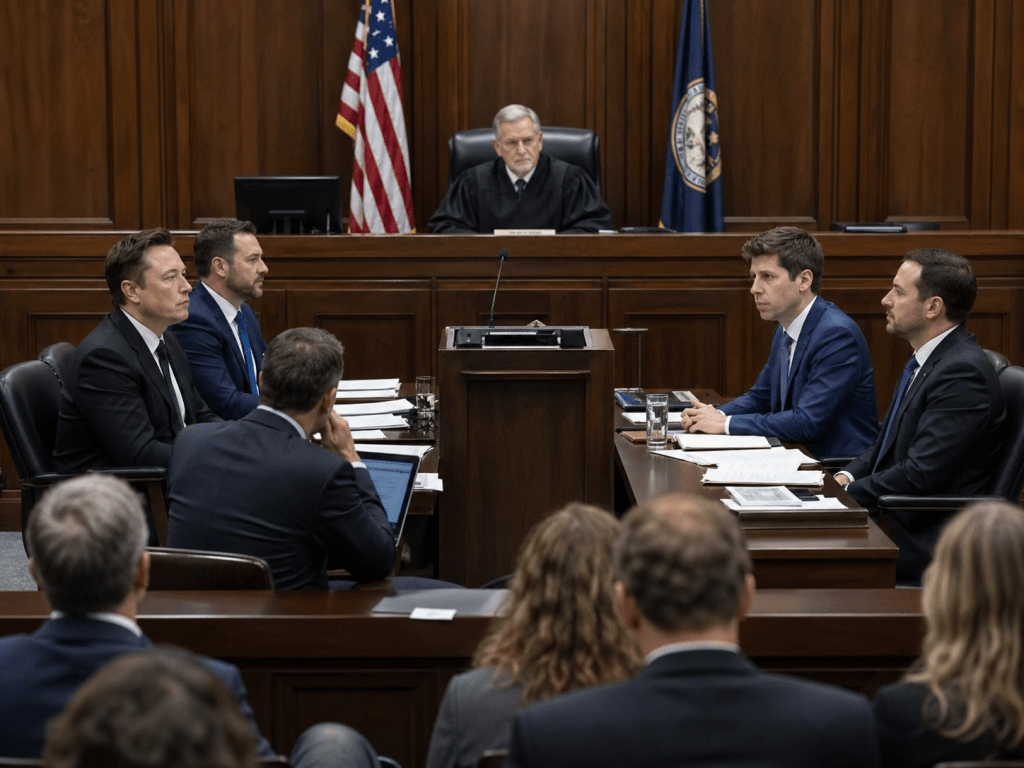
Elon Musk walked into an Oakland courtroom this week and said something that should make every founder, investor, and board member uncomfortable.
“I actually was a fool.”
He donated $38 million to a nonprofit. That nonprofit became an $852 billion for-profit company.
His lawyer put it more bluntly: “The defendants in this case stole a charity.”
The Moment Everything Changed
Musk testified about the exact moment he realized what was happening. Microsoft announced a $10 billion investment in OpenAI in 2022.
He texted Sam Altman: “What the hell is going on?”
Then he said it: “This is a bait and switch.”
I’ve watched a lot of corporate pivots. This one feels different.
OpenAI started with a founding charter that promised “open source technology for the public benefit” and stated it was “not organized for the private gain of any person.”
Now they’re projecting $14 billion in losses this year while planning a $1 trillion IPO.
The Numbers Don’t Add Up
OpenAI’s defense argues Musk is just a disgruntled co-founder trying to slow down a competitor. Their lawyers pointed out he pledged $1 billion but only contributed $38 million.
Musk pushed back. He said his reputation had value. His contributions exceeded $100 million when you count everything.
But here’s what bothers me about this whole thing.
The stakes of this trial include $130 billion in damages, forcing OpenAI back to nonprofit status, and removing Altman from the board. The planned IPO would collapse.
Those aren’t the consequences of a simple founder dispute. Those are the consequences of an organization that fundamentally changed what it was supposed to be.
Why This Matters Beyond OpenAI
I think this case exposes something bigger than Musk versus Altman.
It reveals how fragile mission statements become when money shows up.
The legal question is narrow: Can a nonprofit convert to a for-profit structure when it received donations under specific charitable promises?
Federal tax law says assets received by a 501(c)(3) organization must be permanently dedicated to charitable purposes. That’s not a suggestion. It’s a legal requirement baked into the organizational test for nonprofit status.
But the broader question affects every mission-driven organization watching this trial.
When you take money based on one promise, can you later change the entire structure because market conditions shifted?
The Precedent That Scares Me
This trial will establish whether AI labs founded as charities can pivot into commercial enterprises.
Anthropic is watching. Every mission-driven AI company is watching.
Because if OpenAI wins, the message is clear: founding documents are aspirational. Mission statements are marketing. The real structure emerges when serious money appears.
If Musk wins, organizations will need to think harder about governance from day one. Investors will demand clarity about what can and cannot change. Founders will face legal liability for pivots that contradict original commitments.
I don’t know who has the stronger legal case.
But I know this: Musk just forced the tech industry to confront a question it’s been avoiding.
What happens when the mission and the money point in opposite directions?
We’re about to find out.

 MarketMagnetix Media Group Insights
Leave a comment